In October, reports revealed that Kosovo was in discussion with the UK to receive rejected asylum seekers as part of the UK government’s efforts to set up “return hubs” abroad–a move observers have condemned as punitive and potentially threatening migrants’ rights. Both the United States and Denmark have also made deals with the country in recent years–part of a trend across the globe of externalising migration controls which the UN Special Rapporteur on Human Rights of Migrants called in a recent report “a defining feature of migration, asylum, and border governance” today that poses “significant human rights risks.”
In October, media outlets in the UK reported that the Republic of Kosovo had offered to receive rejected asylum seekers from the UK. According to the Times, Albin Kurti – the Prime Minister of Kosovo – confirmed that the two countries were negotiating an arrangement. As of November 2025, no deal appears to have been finalised, but Kurti is cited saying that “we want to help the UK. We consider that that is our friendly and political duty.”
In May, the UK’s Prime Minister Keir Starmer announced plans to send failed asylum seekers to “return hubs” in third countries–a scheme purportedly intended as a deterrent against irregular migration. Unlike previous efforts to outsource asylum processing to Rwanda, the return hub proposal would see third countries processing rejected asylum seekers for deportation once they have exhausted all avenues of appeal in the UK. The government has reportedly been talking to a number of countries about hosting these hubs–although Albania has publicly challenged the idea, despite it hosting two Italian-operated detention facilities on its territory (see our 2025 submission to the UN Committee on Migrant Workers).
Kosovo’s willingness to accept rejected asylum seekers from the UK is in keeping with its recent pattern of cooperating with partners on migration initiatives, such as its agreement with the United States to accept migrant deportees “with the objective of facilitating their safe return to their countries of origin.” According to the Associated Press (AP), in June this year Pristina agreed to accept up to 50 third-country migrants a year–marking yet another agreement for the Trump administration’s ever-widening deportation and externalisation scheme (see also Ghana, Uganda, and Eswatini). In a statement to AP, Kosovo’s government said it will “select individuals from a proposed pool, provided they meet specific criteria related to the rule of law and public order.”
As of November 2025, the exact status of this arrangement remains unclear–particularly in light of the U.S. decision to suspend its planned Strategic Dialogue with the country on strengthening economic and diplomatic ties “due to concerns about caretaker government actions that have increased tensions and instability.” (Prime Minister Kurti’s moves to centralise power and his government’s harsh treatment of ethnic Serbs living in the north of the country have raised eyebrows in Washington.)
Weaker Safeguards
Numerous observers have expressed fears regarding the UK and U.S. schemes, citing concerns including weaker safeguards in third countries like Kosovo and the risk that asylum seekers will be deported to countries where their lives are at risk and denied opportunities for redress, as well as limited institutional capacity, lack of transparency, and broader concerns that states are outsourcing detention and removal instead of prioritising their own asylum systems. As NACCOM–a network of over 130 frontline organisations working across the UK to end destitution amongst asylum seekers, refugees, and migrants–said in a statement, the idea of “forcibly detaining and ‘returning’ someone to a country they have no connection with” is “yet another punitive measure that prioritises enforcement and deterrence over the rights and dignity of people seeking asylum.”
The idea that Kosovo would be responsible for hosting and possibly returning non-nationals to their countries of origin has also triggered concerns. As Rados Djurovic, the Director of the Asylum Seekers Assistance Center, said: “I don’t believe Kosovo has the capacity or the readmission agreements to implement this.” Kosovo’s quasi legal status, stemming from its non-recognition by some states, complicates its readmission capacity compared with fully recognised EU-states. At the same time, its low volume of asylum applications raises concerns about its readiness to respond to a sudden, large-scale influx (179 people applied for international protection at the Asylum Center in 2023). But as observers have told the Global Detention Project, if returns are difficult to secure, and deportees unlikely to be supported in building a life in Kosovo, there is a real risk that deportees will go underground and resort to smugglers in an attempt to re-enter the EU–particularly given that there has been a surge in smuggling and organised crime across the Balkans in recent years in the wake of stricter border control measures.
Kosovo’s partial international recognition–it is recognised by over 100 UN member states but not by key powers such as Russia and China–also means it is not a member of the United Nations and it has not signed or ratified treaties such as the UN Convention against Torture, the Convention on Migrant Workers, or the Convention on the Rights of the Child. The absence of important international obligations prevents effective human rights monitoring of the situation, increasing the risk of rights violations.
Wider Cooperation: Making Space for Denmark’s Convicted Foreigners
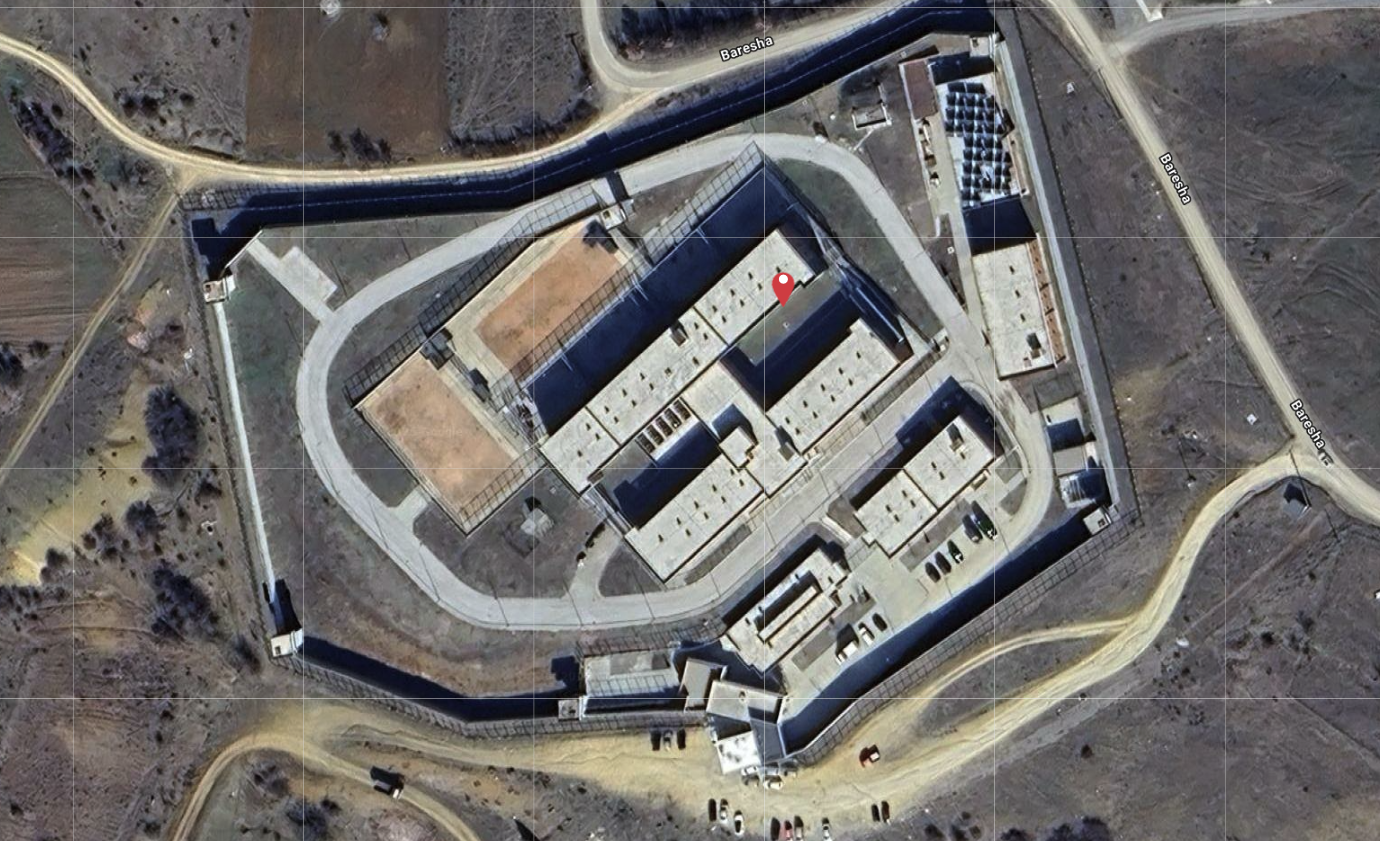
In March 2022, Kosovo also signed a “Treaty“ with Denmark on the “use of the Correctional Facility in Gjilan for the purpose of the execution of Danish sentences.” As part of this agreement, some 300 foreign nationals serving criminal sentences in Denmark who are due for deportation are to be transferred to Kosovo’s Gjilan Prison.
According to the treaty, which Kosovo’s parliament ratified on 23 May 2024, the facility will be subject to a framework of shared responsibilities–including its management by a Danish-appointed ‘Governor’ and a Kosovar-appointed ‘Director.’ Specific responsibilities are laid out by the treaty. Sentences, for example, will be completed in accordance with Danish law and Denmark’s international obligations, the medical unit will be staffed by Danish medical professionals and equipped with Danish-supplied products and medication, and Danish authorities will retain responsibility for processing asylum applications and overseeing deportations. Kosovo, meanwhile, will be responsible for managing prison conditions and external security, providing prison officers (who would remain bound by Kosovo law), and conducting investigations in the event of a detainee’s death or staff abuses.
Observers have expressed their dismay at this agreement. Following a visit to Denmark in May/June 2024, the European Committee for the Prevention of Torture (CPT) noted concerns, including regarding the fact that abuses committed by Kosovar staff are to be prosecuted by Kosovo authorities, “which would amount to a partial relinquishing of jurisdiction for matters that should in principle fall within the responsibility of the Danish authorities.”
A group of anti-torture organisations meanwhile similarly noted this, concluding that “Denmark is accountable for the human rights violations committed against its prisoners, even if they are committed by Kosovo officials, as the authority running the facility. The resulting legal void from these separate jurisdictions will create a perfect recipe for impunity.” The group also argues that the agreement violates international standards including Article 14 of the ECHR, due to it discriminating against prisoners based on their nationality.
Migration and Migration-Related Detention in Kosovo
Although Kosovo is characterised by high emigration rates, immigration to the country–while relatively low–has been increasing in recent years. Labour shortages caused by large-scale emigration have driven demand for foreign workers, especially within the construction sector. The country has also served as a transit country for irregular migrants and refugees seeking to reach the EU, although the number of irregular border crossings has dropped: from 2,564 in 2020 to 634 in 2023.
Immigration detention is provided by both Law No. 04/L-2019 on Foreigners (amended and supplemented by Law No. 06/L-036) and Law No. 06/L-026 on Asylum. Article 97 of the Foreigners Law provides that non-citizens subject to forced removal shall be kept in a detention centre, and lists various grounds for such removal including: irregular entry, failure to comply with a voluntary return decision or re-entry ban, and visa overstay.
While the Law on Asylum provides that asylum applicants are not to be detained for the sole reason of their submitting an application for protection (Article 18(2)), it nevertheless provides that asylum seekers can be detained “where it considers necessary” such as for the purposes of identity verification, to verify elements of their asylum application, and to protect national security and public order. The Law on asylum further provides that child asylum seekers can be detained as a measure of last resort, as well as vulnerable persons such as victims of trafficking, torture survivors, disabled persons, and pregnant women.
In March 2024, the Government proposed a new draft law No. 08/L296 On Foreigners, which is aimed to align with standards set forth by the EU acquis–and reports say that this will come into force on 15 January 2026. This law continues to provide for detention in order to effect removal (Articles 85 and 93), and provides for detention up to 18 months (an initial 6 month period, externable by another 12 months) (Article 95). Despite criticisms from UNHCR, the law continues to permit the detention of vulnerable groups such as children (Article 96(2)).
The country has one dedicated immigration detention centre–the Vranidoll Detention Centre for Foreigners, north of Pristina, which has capacity for 75 detainees. This is part of a larger complex which also includes a Temporary Accommodation Reception Centre. It has received several monitoring visits from observers, including the European Committee for the Prevention of Torture as well as the country’s Ombudsman. In 2024, the Ombudsman visited and noted various concerns regarding the facility, including the fact that there was no nurse present, meaning centre officials were responsible for administering medication, and that detainees are not granted internet access, despite this concern being flagged repeatedly.
In September 2025, 20 foreigners were held in the facility, amongst them 9 persons from Bangladesh, 3 from Egypt, and 2 from Pakistan.